

Black History Month
A Celebration of Our Humanity

“We have never had more need to examine the role of Black History Month than we do when forces weary of democracy seek to use legislative means and book bans to excise Black history from America’s schools and public culture. Black history’s value is not its contribution to mainstream historical narratives, but its resonance in the lives of Black people.”—Association for the Study of African American Life and History (ASALH)
I usually don’t write about Black History Month—because every month is Black History Month here—but in a time when our history is actively being erased, I am compelled to write about it.
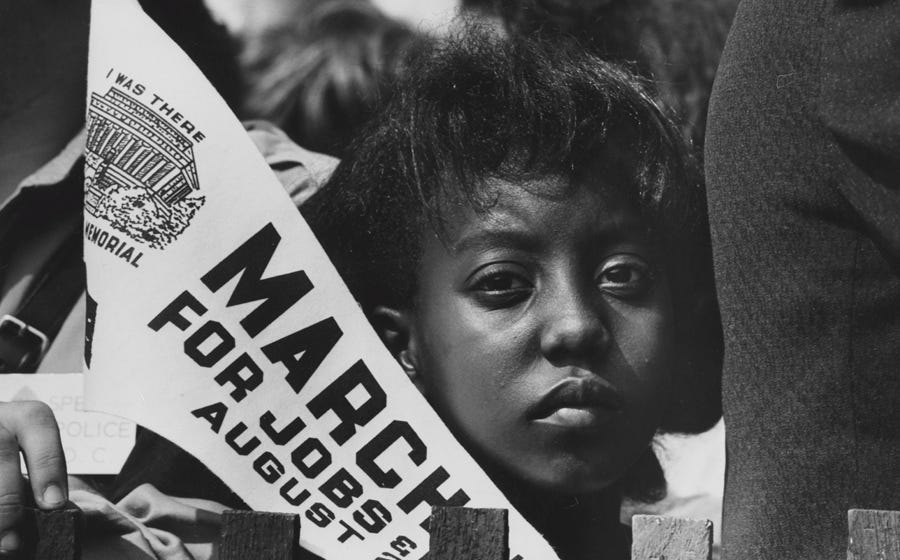
2026 marks the 100th anniversary of Black History Month, which began in 1926 as a weeklong commemoration conceptualized by Dr. Carter G. Woodson. With this observance, Dr. Woodson wanted to “focus on the countless black men and women who had contributed to the advance of human civilization” (from ASALH’s website). To recognize the people and culture that built this country. To acknowledge the atrocity of this enslaved labor, and to celebrate the achievements and contributions of our people despite our enslavement.
The week was intended to be a springboard for further recognition and celebration, not a limited delineation or a quota for corporations and organizations to meet before moving on to the next thing: “Woodson never viewed black history as a one-week affair. He pressed for schools to use Negro History Week to demonstrate what students learned all year” (ASALH).
“Woodson believed that black history was too important to America and the world to be crammed into a limited time frame,” and the Civil Rights Movement of the ‘60s laid the groundwork for a shift from the weeklong commemoration to Black History Month, which was formally institutionalized, 50 years after its creation, in 1976.
. . .
Woodson was, and is, right. Black history is too important to America and the world to be relegated to a month, and that is why the current administration is attempting to erase it entirely. Yes, the current president eventually issued a declaration that February is Black History Month, but we know those words ring hollow when his actions indicate otherwise.
And therein lies the rub. Black History Month has become a proclamation, a performance, rather than a practice. Institutions are happy to acknowledge it, usually briefly, so they can check a box, appear thoughtful, and move on. We must examine what, if any, actions undergird these recognitions. And if an organization doesn’t even bother to perform? Well, at least then it’s clear you know who you’re dealing with.
. . .
What Black History Month is truly about is a celebration of our humanity. Defying all odds, we not only survived, we have thrived. Despite this country attempting to silence us, to hinder our progress, to kill us in plain sight, we have thrived. And I’m not talking about sports or the arenas where our presence is palatable—shut up and play ball—but where it has been unwelcome.
They didn’t want us to read, to go to school, to get an education. They didn’t want us to create art or music, to conjure beauty or power. And we did it anyway. We did it because it is our birthright, and we did it because we are a creative people. We utilized trickster energy and collectivism, mutual aid and care. We lifted as we climbed.
We also did it because we envisioned—and created—lives outside of the confines placed upon us. We did not accept the scraps thrown at our feet to keep us complacent. We strategized and assembled, we fomented and we built. We created our own schools, our own curriculums. We demanded rights not only for ourselves, but for other disenfranchised folks. Because we know, better than anyone, that none of us are free until/unless all of us are free.
This history, this knowledge of the past, is dangerous. If it wasn’t, they wouldn’t be trying to erase it. It is dangerous because it demonstrates that authoritarianism can be thwarted, that power can be subverted and transmuted, that the power belongs to the people. It shows that when we care about our neighbors, government interference cannot halt progress.
These times feel unprecedented, but they are not. They are by design. They are following an old playbook, an old script that survives when ignorance, apathy, and compliance are seeded over education, compassion, and dissent. It is cyclical, but it is not inevitable. If we look to the past, we see that it can be changed. As historian Shanna Ward says in her Word in Black essay, “How Archives Tell the Truth America Tries to Forget”: “History does not repeat because we forget dates. It repeats because records are buried or because we are taught not to read them.”
The Finds
Action. Explore the Poetry Foundation’s beautiful compilation of poetry, articles, and podcasts celebrating Black History Month.
Listen. “Mad” by Solange, featuring Lil Wayne.
I got a lot to be mad about
Watch. Shrinking on Apple TV. I’ve gotta tell you, I was not expecting to love a show about a white guy therapist having a breakdown (especially when said therapist is played by Jason Segel), and the only reason I started watching the series is because I love Jessica Williams, but now I am hooked! The show is the perfect blend of happy-sad, a warmly funny and somehow comforting exploration of grief, trauma, and family. There are a few problematic moments, but they serve to show the viewer that all of us are flawed, even (or especially) the ones who seem to have it all together. Plus, Harrison Ford is irresistibly adorable.
Read. Banned books by Black authors! Read, buy, gift, check out from your library—you get the idea.
Thank you for being here.
Until next time,
Emma