

Finding Awe
The Eight Wonders of Life

Alex Pretti. Renee Nicole Good. Everyday people, an ICU nurse and a poet, attempting to keep their neighbors safe, killed by ICE. The disinformation, the propaganda attempting to blame these peaceful resisters for their own deaths. The attempts toward life, and the attempts toward extinguishing life, blotting out hope, in a seemingly endless dance. Headlines. Video footage. Language used to clarify or confuse, to uphold or diminish.
We are terrified, stricken by the inhumanity perpetrated against our neighbors, our families, ourselves. How did we get here? How do we get out of here? How can we make this right?
As writer Eliza Robertson recently shared on astrologer Chani Nicholas’s blog, we are on the precipice of a new world order. Robertson correlates the current planetary placements with Canadian Prime Minister Mark Carney’s January 20th speech at the World Economic Forum meeting in Davos, Switzerland, a mic-drop moment from a liberal elite who refuses, even though the current system has benefited him, to continue as if there is nothing to see here, to say it’s business as usual. In no uncertain terms, Carney delivered an indictment of the power structure and the cowardice of leaders who acquiesce to and placate the current US administration’s reign of terror.
We cannot go on and pretend that things will go back to the way they were. As Carney says in his address, “We know the old order is not coming back. We shouldn’t mourn it. Nostalgia is not a strategy.” We need a strategy that is unafraid to name, to act. We need leaders who stand up, as Pretti and Good and the countless others who have stood up, in the face of injustice. Leaders who value humanity over profit.
The Eight Wonders of Life
I have been wondering what we can do, how we can continue on, how we live alongside the essential efforts of protest and speaking out. We are tired, we are afraid, we are on the brink of exhaustion and burnout. It is simpler to say that we must seek joy than it is to practice our joy-seeking, simpler to vow that we will rest and prioritize our health than it is to practice our care of self. It is so very hard to fashion life rafts for ourselves and others when the boat of America is sinking, but, if we’re honest, when has it ever not been?
This time feels unprecedented to those of us who were not alive during the Red Scare, the internment of Japanese Americans, the Vietnam War, the Civil Rights Movement. Though history has much to teach us, our access to history, to truth, is being systematically eradicated, eroded. Truth is no longer trustworthy, seeing is no longer believing.
And yet. Amidst turmoil, there is relief. It has always existed, and it will never be destroyed. The path is not a magical fix-it cure for white supremacy and capitalism; it is a commitment, a practice, a reminder and source of goodness and groundedness in an unmoored era: the eight wonders of life.
Coined by psychology professor Dacher Keltner, the eight wonders of life are:
Moral beauty
Collective movement
Nature
Music
Visual design
Spirituality
Big ideas
Life and death
Keltner shares that these eight wonders inspire awe in our everyday lives, defining awe as “an emotion, a brief experience we have in response to vast and mysterious things we don’t understand.” Though the unknown can be frightening, especially now, the mysteries of the universe and our human experience, when perceived through the lens of awe, can become edifying, fortifying our resolve to continue, to keep fighting.
Moral beauty is the people of Minneapolis rising up, Pretti reaching out to help a woman shoved to the ground, the people we know and don’t know who are joining together and linking arms at protests and demonstrations across the country, the words of Carney, speaking truth to power. We feel awe when we see this, the humanity, the kindness and bravery, the rejection of the status quo.
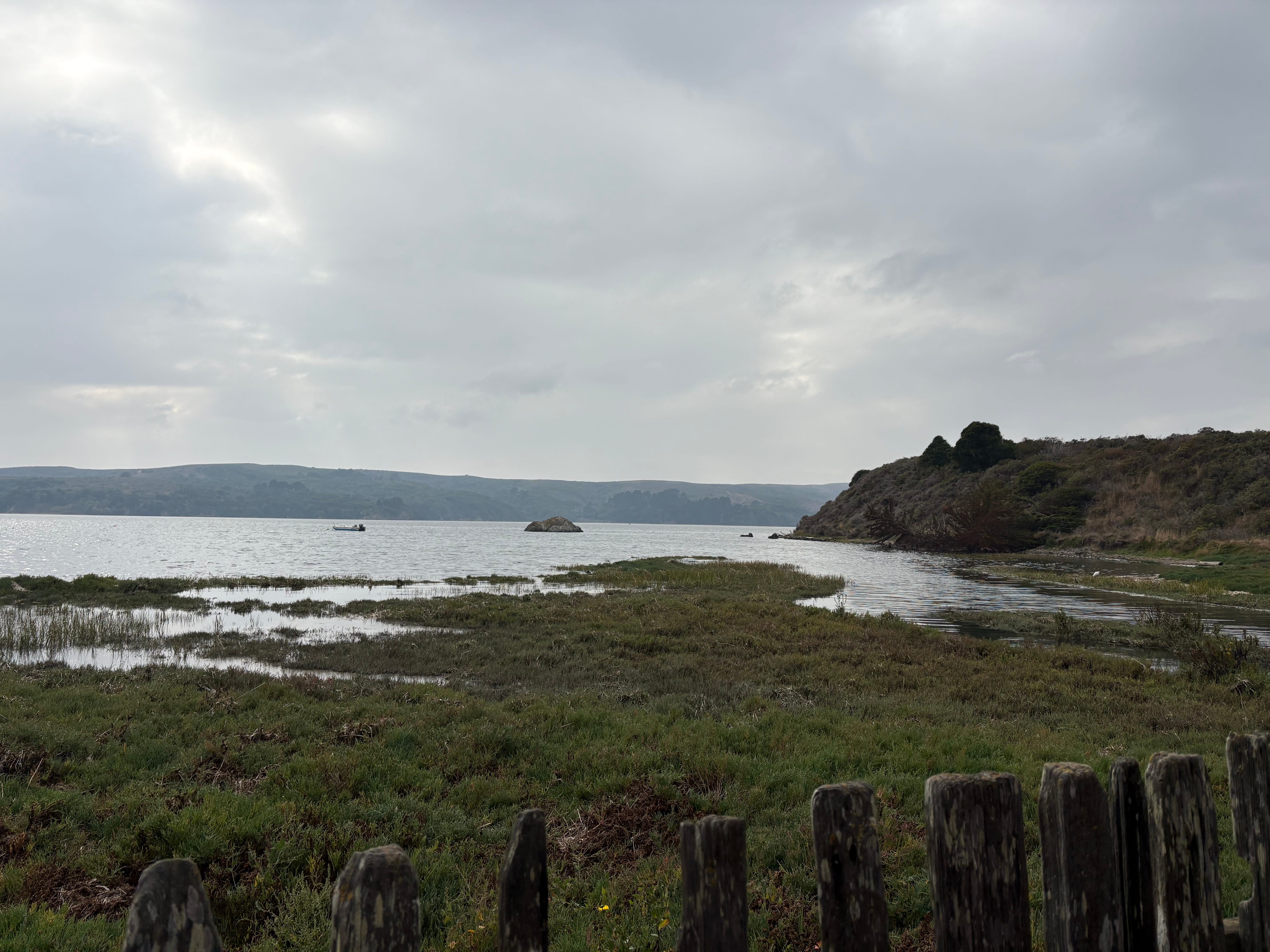
Collective movement is, according to Keltner, what we feel when we are “in a yoga class together, you’re dancing, you’re at a musical or sporting event” and we experience that elusive feeling of oneness, of solidarity and cohesion. The awe of nature goes without saying, whether we’re among the majesty of the redwoods or simply walking the dogs and noticing the bees tumbling out of a blooming bush in front of the neighbor’s house, the nourishment we receive from the earth, the reminder that we are part of something so much bigger than ourselves.
Music also, for me anyways, goes without saying, the inspiration and transcendence it can evoke, whether at a live show or driving in the car and a favorite song comes on. The artistry and the emotion, the language it lends to the inexplicable. Visual design, from admiring the architecture of an old building to a trip to a museum, also inspires awe, a sense of wonder at what mere mortals can accomplish through creative expression.
Spirituality, a connection with, or desire to commune with, something larger than ourselves, a sense of belief or faith, undoubtedly induces awe, and with it, a place of belonging. When I am unmoored and can’t see the forest for the trees, returning to my spiritual practice, recommitting to a worldview that removes me from the center, imbues my life with more peace, more ease, even if momentarily.
The big ideas Keltner describes are like “when I first read Karl Marx’s ‘Economic Theory of Consciousness,’ I was just like, ‘I can’t believe it. This guy can explain thought patterns and class struggles.’” It’s awe-inspiring to encounter the work of someone synthesizing something so enormous, to contemplate the systems and structures that affect our lives and the means and methods by which we might achieve change. Everything in existence was once an idea.
Life and death; what could be bigger or more awe-inducing? Keltner tenderly describes this eighth wonder by sharing the story of his brother’s death, a loss that led Keltner to “practice the awe of moral beauty.” Wading through grief, Keltner turned to his research and “relied on the eight wonders of life as a roadmap…to seek out mystery and go where one might rediscover a childlike sense of wonder.”
Keltner found awe in the moral beauty of others, strengthening his sense of connectedness by “contemplating a mentor, or the kindness of strangers in the streets, or the symphonies of laughter of children.” In doing so, he felt his brother’s spirit, encouraging him “to bring a little more good to our world.”
By studying the science of awe, Keltner discovered that this state of being “orients your attention toward others, and prompts you to explore and engage with the world.” This attention, the curiosity and engagement, are antithetical to the apathy the current administration wants us to feel. “Power over,” a type of power referenced in Robertson’s astrology piece, does not want us to be oriented toward each other. Caring about our neighbors, standing shoulder to shoulder with those under domination, thwarts the powerful, defying the status quo. Awe orients us toward life, and life, every life, is precious.
A sense of awe may feel difficult to come by these days, days when we are tired and overwhelmed, but it is not impossible. Rather than seeking to achieve awe, like a goal, which our productivity-obsessed culture loves to tout, we can practice it, as Keltner does, appreciating the moments of connection and beauty that inspire awe without force. We can witness the moral beauty of others, the vastness of the ocean, the crescendo in our favorite piece of music. We can remember that we are part of something, that history is now, that progress is cyclical but inevitable, that goodness exists.
We are suffering, the world is hurting, this country is broken, and so are we—but not irreparably so.
The Finds
Action. From Equity in the Center’s always-excellent Racial Equity Tools newsletter:
Listen. “Somebody Loves You” by Mayyadda and Kuni.
Somebody loves you
Ain’t a thing that you got to do
Watch. Come See Me in the Good Light on Apple TV. If you want to feel awe, watch this documentary about the late poet Andrea Gibson, who died on July 14, 2025. Filmed in the months leading up to their death, the documentary follows Gibson through cancer treatment and their preparation for their final spoken word show. Though devastating, what comes through more than anything is the moral beauty of Gibson and the humans who love them. Inspiring, hopeful, and necessary.
Read. Workhorse: A Novel by Caroline Palmer. Palmer, a former editor at Vogue.com, writes like a bat out of hell, offering a stunning debut novel that careens through the New York of the early 2000s, when fashion magazines were in their heyday. Palmer sharply captures the panic and hope of Clodagh Harmon, an editorial assistant at an unnamed fashion magazine who, in her quest to become an editor, is fueled by the realization that any minor misstep could derail her already tenuous grasp on “making it” entirely. What begins as a bildungsroman in the cutthroat world of fashion evolves inexorably into a diabolical tale of ambition, envy, and shocking machination. I couldn’t put it down!
Thank you for being here. May we experience awe.
In solidarity,
Emma
Thank you E. Today won’t be so bad.